PoE2 Weapon Set Points Guide: 7 Checks Before You Spend Them
PoE2 weapon set points are not extra free travel points. They are conditional passive allocations that let one character keep a shared route while swapping small branches between Weapon Set I and Weapon Set II. Use them after the normal path is legal, not as a way to hide an over-budget build.
Checked against current PoE2 0.5 planning references on July 18, 2026.
Quick answer: weapon set points modify a valid build, they do not make an invalid build valid
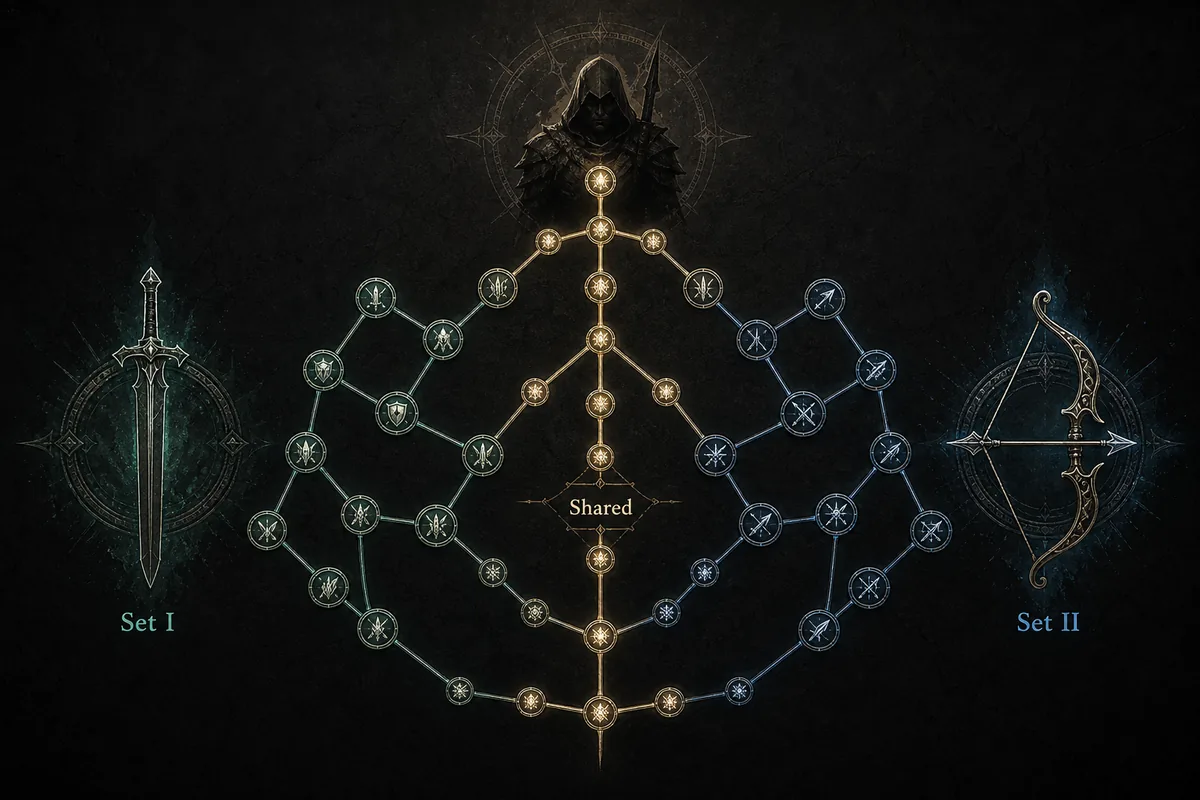
The safest way to understand PoE2 weapon set points is to split the build into two layers. The first layer is the shared passive tree: class start, travel nodes, attributes, life or energy shield, recovery, core damage clusters, and any keystone that both weapon setups need. The second layer is conditional specialization: small branches that should be active only when Weapon Set I or Weapon Set II is active.
That distinction is the reason this topic deserves its own page instead of being folded into a generic passive tree guide. A player searching for PoE2 weapon set points or PoE2 weapon set passive points usually does not only want a list of campaign rewards. They want to know whether those points can pay for a second damage cluster, whether they count as normal passives, why a route breaks after export, and how to test a swap without creating a misleading planner file.
The short rule is simple: build the legal shared route first, then spend weapon set points on meaningful differences. If the two weapon sets would allocate exactly the same branch, the points add complexity without improving the plan. If the second weapon route needs so many travel nodes that the shared route becomes fragile, the build is probably asking the weapon system to solve a problem that belongs in the main tree.
7 checks before spending PoE2 weapon set points
Run these checks before copying a build file, exporting a route, or assuming a campaign reward fixed the passive budget. The goal is not to spend every available point. The goal is to make the two weapon states easier to verify.
A useful weapon-set branch has a narrow job. Common examples include a boss-damage cluster for a slower weapon, a clear-speed cluster for a faster weapon, ailment or projectile support that belongs to one setup, or a defensive utility branch that only matters during a swap. Weak examples are long travel paths, duplicated notables, or points spent merely because the planner shows an unused budget.
Weapon set points vs normal passive, ascendancy, campaign, and Atlas points
Most passive-budget mistakes come from mixing point categories. Level-up passive points build the general route. Campaign weapon set rewards expand the conditional weapon budget. Ascendancy points unlock class specialization nodes. Atlas points change endgame map behavior. They can all affect the final build experience, but they are not interchangeable.
This is where existing search results are often thin. Many pages explain how to click a weapon set button, while reward checklists explain where campaign points come from. Fewer pages show the boundary between acquisition and allocation. If your question is where the campaign rewards are, use the skill point quest checklist. If your question is how those rewards should shape Set I and Set II, use this guide.
A practical allocation workflow for Set I and Set II
Start by saving a baseline build with no conditional branch. Search the core notables in the PoE2 passive tree planner, choose the class start, and make sure the route still works if both weapon-set branches are ignored. This prevents the common mistake where the character looks legal only because the planner is displaying one conditional state.
Next, write one sentence for each weapon set. For example: Set I clears maps with projectile speed and pierce; Set II handles bosses with stronger single-target damage and recovery. If you cannot write a different job for the second set, do not spend points yet. The difference should be visible in the build notes, not just in a few colored nodes.
Then allocate the smallest branch that proves the difference. Avoid spending weapon set points on long travel unless the payoff is obvious. If a route needs three or four travel nodes before reaching the first meaningful notable, compare a nearby shared cluster first. A smaller shared route plus one conditional notable is usually easier to maintain than two stretched conditional routes.
Finally, export after testing the display state. Check Weapon Set I, Weapon Set II, total normal passives, campaign weapon set points, and ascendancy budget separately. Keep a note for missing campaign rewards, because an exported file that silently assumes all rewards can mislead anyone who imports it before finishing the campaign.
Common mistakes that make weapon set plans unreliable
The first mistake is counting weapon set points as unrestricted passives. This creates a route that appears to reach more notables than the character can actually support. The second mistake is using both sets to chase unrelated mechanics: a build that swaps between poison, ignite, minions, and stun at the same time is often trying to be four builds at once.
The third mistake is ignoring patch context. PoE2 early-access patches can change node wording, campaign reward flow, weapon requirements, and support-gem assumptions. If a guide was written before the current 0.5 structure, verify the reward count and the route in game before treating its point budget as current.
The fourth mistake is exporting without labels. A build file should say why a branch exists. A short note such as Set II is only for boss staff swap or Set I pays for clear-speed projectile nodes makes later audits faster and prevents teammates from treating conditional points as always-on power.
Sources, media, and verification notes
Official context and media were checked through the Path of Exile 2 official site and the official Steam store page. Campaign reward and passive-point wording were cross-checked against current community references such as PoE2 Wiki, Mobalytics, and Maxroll. Community pages are useful for route details, but the in-game interface and official patch notes should win when wording changes.
The hero diagram on this page is a non-official planning illustration generated for this guide. It is not a Path of Exile 2 UI screenshot and does not claim exact node positions. The two gameplay images used later on the page are existing official Steam media already used by this site to illustrate campaign reward and objective-check contexts.
7 spending checks
Check
Question
Why it matters
Action
Shared route legality
Can the build still connect without conditional nodes?
Prevents hiding travel cost inside a weapon state.
Build the normal route first.
Different weapon jobs
Does Set I do something Set II does not?
Conditional points matter only when the setups differ.
Write one job sentence per set.
Small branch size
How many travel nodes come before the payoff?
Long conditional travel is hard to maintain.
Prefer nearby notables or shared travel.
Reward count
Have campaign weapon set rewards actually been earned?
A planner can assume points the character does not have.
Audit campaign rewards separately.
Ascendancy boundary
Are ascendancy points being counted separately?
Ascendancy and weapon budgets solve different problems.
Keep separate counters in notes.
Patch freshness
Was the guide or build made for the current 0.5 tree?
Moved or changed passives can break old plans.
Compare against the current planner data.
Export clarity
Will another player understand why each branch exists?
Unlabeled conditional nodes are easy to misuse.
Add notes before exporting.
Point type comparison
Point type
Controls
Best use
Weapon-set budget?
Level-up passive point
General passive route
Shared path, attributes, defenses, core damage
No
Weapon set point
Conditional branch
Small Set I or Set II differences
Yes
Ascendancy point
Ascendancy tree
Class-specialization power
No
Campaign reward checklist
Source of weapon set points
Finding missing +2 rewards
Feeds the weapon budget
Atlas point
Endgame map tree
Sustain, farming, bosses, league mechanics
No
Allocation workflow
Non-official planning illustration: use weapon set points for narrow conditional branches after the shared route is legal.
1. Save a baselineConfirm the route works before Set I or Set II branches are added.
2. Name each weapon jobKeep one clear purpose per set, such as clear speed, boss damage, or utility.
3. Allocate the smallest proofTake the shortest branch that proves the job instead of filling every optional node.
4. Recount point poolsNormal passives, weapon set points, ascendancy points, and Atlas points stay separate.
5. Export with notesExplain the swap logic so the file remains readable after a patch or respec.
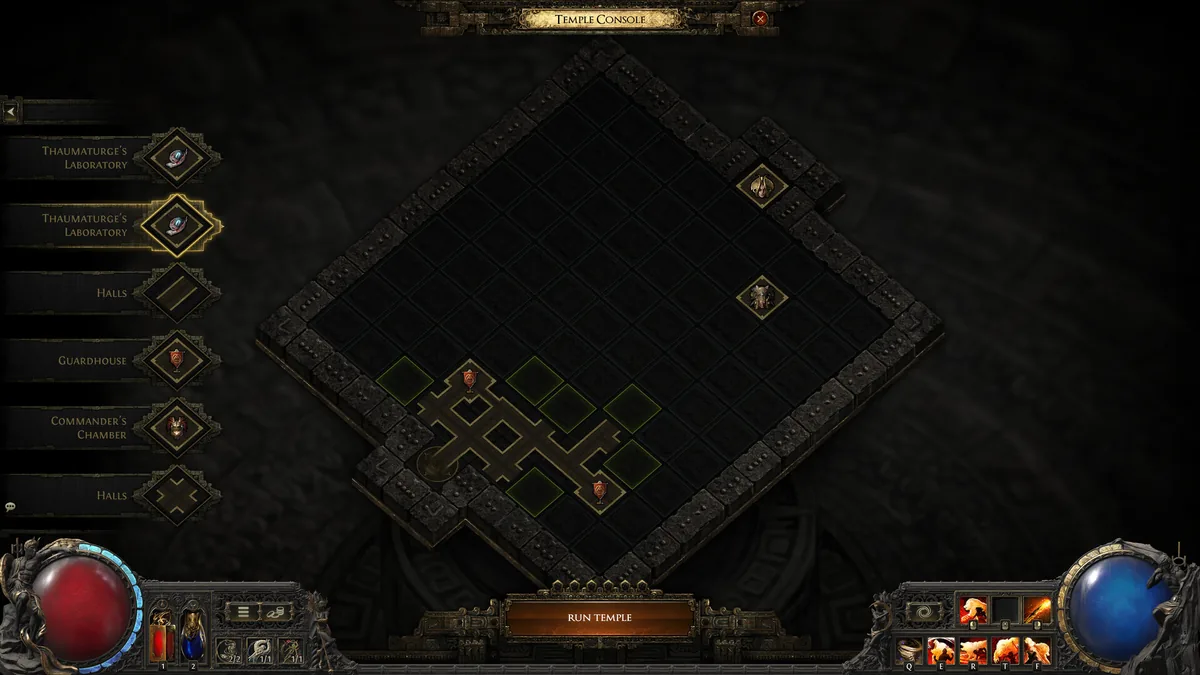
Official Steam media: campaign progress and combat rewards can affect the weapon set point budget, but the build planner still needs a separate allocation check.Official Steam media: objective markers help find missing reward events before assuming a planner budget is complete.
Media note: The hero diagram on this page is a non-official planning illustration generated for this guide. It is not a Path of Exile 2 UI screenshot and does not claim exact node positions. The two gameplay images used later on the page are existing official Steam media already used by this site to illustrate campaign reward and objective-check contexts.
No. Treat them as conditional allocations for Weapon Set I or Weapon Set II. They do not replace the normal shared passive route.
What should I spend weapon set points on first?
Spend them only when the second weapon setup has a clear job, such as boss damage, clear speed, ailment support, or a defensive utility branch.
How many weapon set points can I get in the campaign?
Current 0.5 campaign guides track 12 reward events worth 24 campaign weapon set passive points. Keep any later Atlas reward outside that campaign count.
Why does my imported build look over budget?
The build may be mixing normal passives, weapon set branches, ascendancy points, or assumed campaign rewards. Recount each pool separately before changing the route.
Can I use weapon set points for travel nodes?
Sometimes, but long conditional travel is a warning sign. Prefer a legal shared route and short conditional branches with a clear payoff.
Is this an official Path of Exile 2 tool?
No. This is an independent fan-made planning guide and route lab. Verify final values in game and through official patch notes when a patch changes the tree.